事実婚、同性婚、任意後見、離婚、そのほか家事・家族に関する契約 > CONTRACTS RELATED TO DOMESTIC & FAMILY MATTERS


This is a website of a certified administrative procedures legal specialist, i.e., gyosei-shoshi in Japanese.
We support you for the preparation of contracts, agreements, and settlement documents between partners, family members, and people equivalent to family in connection with de facto marriage, same-sex marriage, voluntary guardianship, divorce, and other family matters, as well as drafting proposals for notarial instruments based on those documents.
INDEX
- Introduction
- Contracts Relating to Domestic and Family Matters
- What Is a Notarial Instrument?
- Guidance by Type of Contract or Contract Notarial Instrument
- Advantages of Choosing Our Office
- Work Process
- Fees of Our Office
- Payment
- Privacy Policy
- Office Information
- Representative’s Profile
- Please Feel Free to Contact Us
INTRODUCTION
Our office mainly provides professional services as a certified administrative procedures legal specialist, i.e., gyosei-shoshi in Japanese. in two fields.
One is the field introduced on this website: support for preparing contracts, agreements, and settlement documents relating to de facto marriage, same-sex marriage, voluntary guardianship, divorce, and other arrangements between family members or people equivalent to family, as well as drafting proposals for notarial instruments based on those documents.
The other field of our services is applications for status of residence, permanent residence and kika (naturalization) for foreign nationals. If you are interested, please visit this site of ours as well.
With respect to de facto marriage, same-sex marriage, voluntary guardianship, divorce, and other family or equivalent-to-family relationships, even when partners or family members wish to clarify their thoughts, wishes, plans, and responsibilities, they may feel uncomfortable reducing their relationship to a document with a dry and business-like name such as a contract, agreement, or memorandum.
However, organizing your thoughts and putting them into writing can make it possible to look back and confirm, “This was the agreement we made at the time,” if differences in memory arise in the future. When you decide to prepare such a document, we assist you in making it legally accurate and clear in its meaning after many years, not only for yourself and your partner, but also for third parties.
We always do our best to listen carefully to the circumstances of our clients and to handle each case with utmost attention to its individual facts. We work with the hope that our clients’ future lives will be more secure and stable.
Contracts Relating to Domestic and Family Matters
Matters such as de facto marriage, same-sex marriage, voluntary guardianship, divorce, and other family or equivalent-to-family relationships, including the creation, modification, or dissolution of a status, position, or relationship within a family, are collectively referred to as domestic and family matters.
So far, we have also referred separately to contracts, agreements, and settlement documents. Although they are called by different names, they can generally be regarded as legally the same. Therefore, we will collectively use the word “contract” from now on.
Today, interpersonal relationships and concepts of family are changing significantly and becoming increasingly diverse. In Japan, however, the law-makers are too slow to keep pace with social needs.
In particular, de facto marriages and same-sex marriages receive little protection under the current Civil Code and other laws compared with legally registered marriages between a man and a woman. As a result, people in such relationships often experience unignorable disadvantages at various stages of life.
In addition, there are people often referred to as social minorities or economically vulnerable persons. Specifically, there are individuals who experience discrimination, social exclusion, and insufficient legal protection on the grounds of gender, sexual orientation or identity (LGBTQ+), nationality, race, beliefs, disability, occupation, income, or other factors, placing them in insecure and socially weak positions.
Contracts relating to domestic and family matters can often help strengthen the position of such individuals where legal protection is insufficient.
A contract is a promise made between people. If a contract is lawful and its terms are clear and unambiguous, it creates rights and obligations for the parties. It also serves as evidence to notify third parties that the parties have entered into an agreement that binds them to each other.
A contract can be formed merely by oral agreement. However, to avoid future disputes over what was said and to facilitate presentation to third parties, it is advisable to put the agreement in writing, that is, to prepare a contract document. As evidence that both parties agreed to the contents, they will normally sign the document and/or affix their registered seals.
By making a contract, people in de facto marriages or same-sex relationships can enjoy a protective effect through the contract protected by law, instead of having the relationship itself directly protected by law.
What does this mean?
For example, in a de facto marriage, the parties may prepare a contract stating that they agree to follow every right and obligation of spouses stipulated under the Civil Code, except for filing a marriage registration. In that case, even though they are not legally married, the contract creates rights and obligations between them equivalent to those of legally married spouses. If one party breaches those obligations, a court may order compensation.
Without such a contract, the relationship might be regarded merely as an intimate relationship. In that case, if one partner were unfaithful and unfairly ended the relationship, the other might not be entitled to claim damages.
In other words, by entering into a contract, a couple in a de facto marriage may be able to obtain protections similar to those enjoyed by a legally married couple.
However, this does not mean that they will receive exactly the same legal protection as a legally married couple in every situation. Particular care is required where legal effects toward third parties are involved. In addition, with respect to inheritance, a de facto spouse cannot become an heir even if the couple have had a complete contract. Therefore, other measures, such as making a will that grants a legacy, must be considered.
In any event, the law protects rights arising from lawful contracts. If those rights are infringed, the law may allow compensation for damages and may order the other party to perform contractual obligations. A contract may also serve as evidence of the relationship between two people in dealings with third parties.
Because these contracts are written expressions of promises between private individuals, they are referred to as “private documents.” The contrasting term is public documents, meaning “official documents.”
What Is a Notarial Instrument?
There are many types of notarial instruments (“kosei-shosho” in Japanese) used in various fields, but the notarial instrument referred to here is a document that a notary (a public official with special legal qualifications) makes based on the contents of a private contract between individuals through the following process: the notary listens to the contents of the contract directly from both parties, transform them to legal writing, reads the writing aloud to both parties, and then both parties approve, sign, and seal the writing. A document prepared in this manner is called a “contract notarial instrument.”
Because a notary, who is a public servant, formalizes the contents of the contract into a “contract notarial instrument,” it becomes an “official document.”
As an official document, it has greater credibility toward third parties than a private document. It is also possible to give the contract the power of judicial enforcement.
Judicial enforcement means that court officers may, for example, seize the salary or assets of a party who fails to comply with the agreed terms. Even without actual enforcement, this serves as powerful psychological pressure to encourage compliance with the agreed terms.
In this way, a private contract prepared between the parties can be upgraded, through the involvement of a notary, into an official document with strong legal effect.
However, to achieve this, it is generally necessary for both parties themselves to go to a notary office, directly explain the desired contract terms to the notary, ask the notary to transform them into legal writing, carefully review the contents of the writing, conclude with their signatures and seals in the presence of the notary, and pay the notarial fees. This is a process that requires time and effort.
To reduce the burden on the parties, we can prepare a draft of the contract notarial instrument and, according to the intentions of both parties, communicate with the notary and carry out the drafting and revision process on their behalf.
Furthermore, in some cases, we can act as the representative of one of the parties and express consent to the contents of the notarial instrument.
Guidance by Type of Contract or Contract Notarial Instrument
Please click on the type of contract or contract notarial instrument that you are looking for (listed below) to go to the corresponding explanation page.
De Facto Marriage (Separate Surnames)
Same-Sex Marriage (Partnership Agreement)
Post-Death Affairs Delegation (appointing someone to handle matters after death)
Support Agreement (sharing of costs and responsibilities among multiple children regarding care of an elderly parent)
These are some of the contract types that are in relatively frequent demand. It may not be an exaggeration to say that there are as many necessary types of contracts as there are people.
For example, these can include matters relating to pets, inheritance of overseas real estate owned by a foreign spouse, or any other arrangements. If you would like promises or agreements with your family or a person equivalent to family to be put into writing, please feel free to consult us.
Advantages of Choosing Our Office
- Careful support for each individual case!
- Free online consultation!
- Reasonable service fee structure!
- Fixed fee with no worry about extra charges!
- Reliable legal knowledge and research skills!
Work Process
1. Contract Drafting
| 1. Free Consultation | Free one-hour consultation will be conducted via video conference. It can be divided into two sessions upon request. |
| 2. Contract & Payment | After hearing the client’s request, we will send them a quotation. Upon agreement on the terms and conditions, both parties shall execute the contract, and the client will be requested to pay our service fee in advance. |
| 3. Making Outlines | By meeting directly with the client and the other party, or through telephone or video conferences, we will determine the clauses to be included and make the outline for each clause. |
| 4. Drafting Details | Through continued telephone calls, video conferences, and email exchanges, we will decide detailed conditions and wording, and refine the content to ensure accuracy. |
| 5. Completion | The client and the other party will review the final draft, and revise it until they are satisfied with the contents of the draft. |
| 6. Settlement | If expenses are incurred in course of the work, payment of those expenses will be required. |
| 7. Delivery | Once expense is settled, the formatted contract document will be delivered to the client. |
2. Drafting a Contract Notarial Instrument and Acting as Agent for One Party in the Notarial Deed Procedure*
| 1-6 | Same as for contract drafting. |
| 7. Power of Attorney | We will obtain a power of attorney from the party whom we will represent. |
| 8. Communication with Notary Office | We will handle the application to the notary office, submission of drafts and supporting documents, and work with the notary to revise the draft until the final version is created. |
| 9. Reservation of Appointment, etc. | Once the final draft is completed, we will arrange the date and time for the unrepresented party and us to visit the notary office, and confirm the notarial fees**. |
| 10. Attendance, Signing and Sealing, Payment of Notarial Fees | The unrepresented party and we will visit the notary office. After expressing agreement to the contents read aloud by the notary, signing and sealing the document, and paying the notarial fees, the notarial deed will be completed. |
| 11. Settlement | If expenses are incurred in course of the work, payment of those expenses will be required. |
* We can only take a role of an agent within the Tokyo metropolitan area. Depending on the type of notarial deed, representation may not be possible, and personal attendance by both parties are required.
** As a rule, notarial fees are paid at the notary office on the day of the appointment, so the client is requested to bring the required amount on the day.
Fees of Our Office
(JPY, excluding consumption tax)
| Item | Fee |
| Drafting a partnership agreement for a de facto marriage or same-sex marriage | 20,000 |
| Drafting a partnership agreement for a de facto marriage or same-sex marriage | 30,000 |
| Drafting a divorce settlement agreement | 40,000 |
| Services as an agent for one party in a notarial deed procedure | 50,000 |
For matters other than those listed above, we will provide an individual quotation after consultation. Please feel free to contact us.
Areas Covered for Notarial Deed Procedures
Notary offices within the Tokyo metropolitan area (limited to the locations that are not inconvenient to be accessed).
Payment
(1) We request you to pay our service fee in full at the time of contract (before starting our work) unless in exceptional cases.
(2) If a contract is cancelled or terminated before completion of the services, preparation of the application becomes impossible to continue, or the application after its submission is withdrawn due to reasons attributable to the client, no refund will be made.
(3) Necessary expenses incurred during the performance of the work must be paid either as they arise or collectively upon completion of the work.
(4) If unexpected circumstances occur and extra costs arise, both parties will discuss and decide based on good will and cooperation.
Privacy Policy
Our office has a privacy policy to protect clients’ personal information and privacy during our work.
You can read the full privacy policy (in Japanese and English) on the page of Privacy Policy.
Office Information
| Name | Tada Gyosei-shoshi Office |
| Address | 3-13-2 Kami-soshigaya, Setagaya, Tokyo 157-0065 Japan |
| Representative | Tada Masakazu |
| Mobile | +81-(0)80-4926-9980 |
| info@tada-gyosei.com | |
| Business Hours | Weekdays 9:00 – 18:00 |
| Consultation | Phone call or video meeting can be scheduled outside the above-specified regular business hours, including weekends and holidays. |
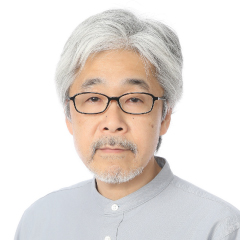
Representative’s Profile
| Name | Tada Masakazu |
| Qualification | Certified administrative procedures legal specialist, qualified for application agency services (Registration No. 24081082) |
| Career | After graduating from Keio University (Faculty of Law) in 1988, I worked mainly for a chemical company engaging in international business, including import/export operations and security export control, then established this office in 2024. I lived abroad for 14 years (in the UK and Thailand). A member of NGO ‘Solidarity Network with Migrants Japan’ (SMJ) |
Please Feel Free to Contact Us
Our office always tries to work carefully according to each individual case. If consulting our office helps you find a new possibility, improve your situation, or solve your problems, we would be very happy.
We tried to write this website using everyday words as much as possible. However, for people who are not familiar with laws or government regulations, some parts may still be difficult to understand.
If so, please do not hesitate to ask questions through Inquiry form. Or you may call us directly. We look forward to hearing from you.